Hawaiian Harmony Research: What Studies Exist and What They Cover
A search for Hawaiian Harmony research usually means one question: has anyone tested this product? The answer is short, and the rest of the story is about what can and cannot be borrowed from studies of single ingredients. This post keeps the two apart.
Written by the Hawaiianzharmony editorial team · Medically reviewed by Dr. Maria Menucci, Physician · Last updated
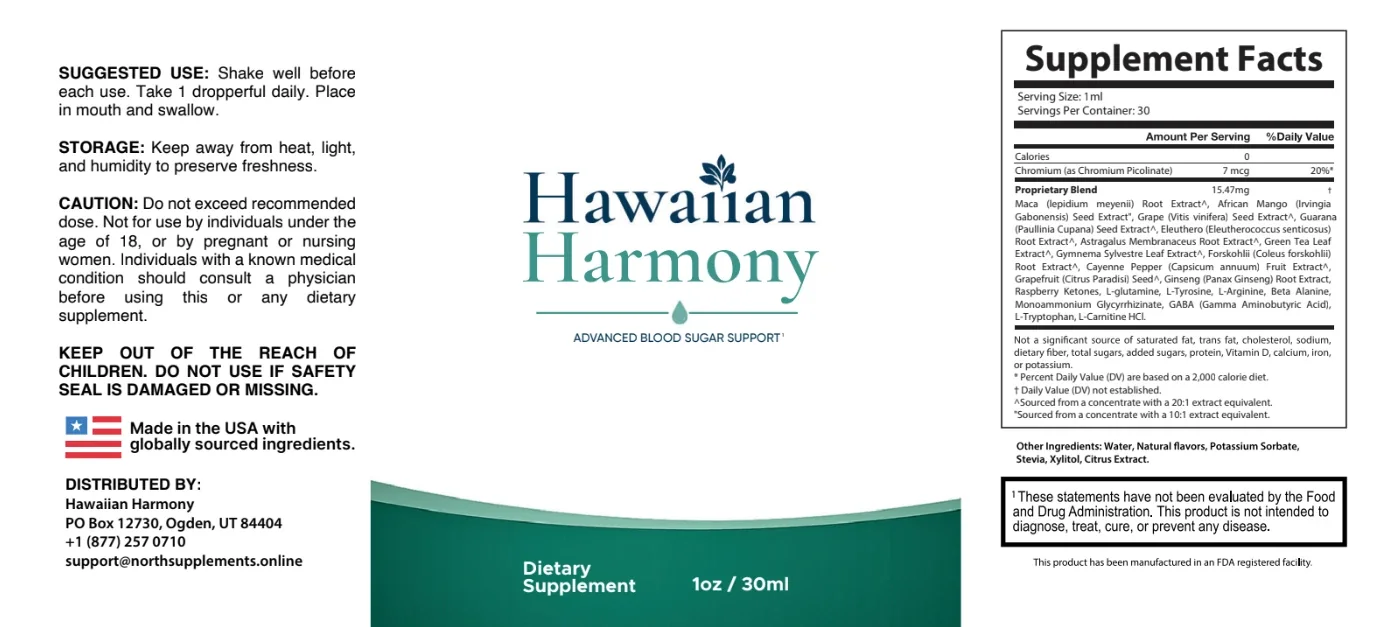
Hawaiian Harmony research on the finished product is not published on this site. What exists is research on single ingredients, usually at larger doses than a 15.47 mg blend can hold. Chromium is the one amount the label declares: 7 mcg, which is 20% of the Daily Value.
Key facts
- No trial of the finished Hawaiian Harmony product is published on this site.
- The label declares 7 mcg of chromium and a 15.47 mg blend of 21 names.
- Eleven of the 21 blend names have a published daily amount in a source this site opened. None of the eleven reaches it.
- NIH says there is insufficient rationale to recommend chromium supplements for people with type 2 diabetes.
- Ten names carry a 20:1 extract mark and one a 10:1 mark. No marker compound is stated.
- The sales page suggests 180 to 210 days before judging. That is a seller suggestion, not a study result.
Is there Hawaiian Harmony research on the finished product?
Not that we can link. No trial of the finished drops is published on this site, and the sales pages do not name one. A lot code and a certificate reference are printed on the label, but the certificate itself is not published, so it cannot be treated as a test report.
That does not mean the drops do nothing. It means that a claim about results has nothing published behind it. When you meet a claim online that Hawaiian Harmony research proves something, ask for the link. If there is no link to a study of this exact product, treat it as marketing.
What does Hawaiian Harmony research borrow from chromium studies?
Chromium is the one amount the label declares. It is 7 mcg as chromium picolinate, and the label's 20% Daily Value figure is correct against the 35 mcg Daily Value.
The NIH fact sheet reports that trials in diabetes have used anywhere from 1.28 to 1,000 mcg a day, most often as picolinate, so 7 mcg sits inside that range. The same fact sheet concludes that there is insufficient rationale to recommend chromium supplements for people with type 2 diabetes. It also says about 1.2% of chromium is absorbed from picolinate, which on 7 mcg is roughly 0.08 mcg.
| Item | Figure |
|---|---|
| Chromium on the label | 7 mcg |
| Daily Value | 35 mcg, so 20% |
| Studied range in diabetes trials | 1.28 to 1,000 mcg a day |
| Typical chromium-only supplement | 200 to 500 mcg |
| Absorbed from picolinate | About 1.2% |
Read the label and the terms yourself
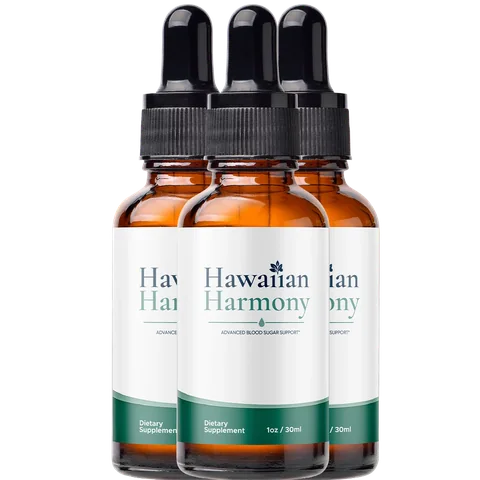
The sales page shows the packs, the price and the 180-day money-back terms.
See today's price and guarantee
USA Authorized Hawaiian Harmony Retailer · not medical advice
Can Hawaiian Harmony research on the 21 blend names be trusted?
Be careful here. The blend is 15.47 mg for twenty-one names, and the label must list them in descending order by weight. So the k-th name can weigh at most 15.47 divided by k mg. Maca root, first on the list, is at most 15.47 mg. L-carnitine HCl, last, is at most 0.74 mg.
Eleven of the names have a published daily amount in a source this site opened, such as beta-alanine, arginine, glutamine and carnitine in the NIH sport supplement pages. At the arithmetic ceiling, none of the eleven reaches that amount. Studies of those ingredients used grams, while this blend holds milligrams for all twenty-one together.
Ten names carry a 20:1 mark. Read generously, 15.47 mg of concentrate stands for at most 309.4 mg of starting plant, shared among twenty-one names. The label gives no marker compound or percentage, so the strength of any extract is unknown.
What would good Hawaiian Harmony research look like?
You can use this short list to judge any claim you find.
- A trial of this exact product, named, with a link.
- A stated dose for each ingredient, not a total for twenty-one.
- People who were randomly assigned, with a comparison group.
- Results that are reported even when they are dull.
- A lab report for the lot you are holding, not only a reference code.
The FTC guidance on health products says randomised controlled trials in humans are the evidence experts would expect for a benefit claim. A story from one buyer is not that.
How should you use this research picture when deciding?
Treat the drops as a supplement with an open label and no product trial. If you take insulin or another blood sugar medicine, show the panel to your doctor first, because chromium may add to their effect. Keep any tests or readings you already do, and do not change a prescription because of a supplement. The ingredients page shows each name and its ceiling, and the sources page links every study used.
Frequently asked questions
Is there a clinical trial of Hawaiian Harmony?
None is published on this site, and the sales pages do not name one.
Does research show chromium helps blood sugar?
The NIH fact sheet says there is insufficient rationale to recommend chromium supplements for people with type 2 diabetes.
Does 7 mcg of chromium match what studies used?
It is inside the range of 1.28 to 1,000 mcg a day used in diabetes trials, but far below the 200 to 500 mcg of a typical chromium-only supplement.
Why can the blend not be compared with studies?
Because the label gives one total of 15.47 mg for twenty-one names. No single amount is printed to compare with a study dose.
What is the 20:1 mark?
A footnote meaning the ingredient comes from a concentrate with a 20:1 extract equivalent. It says how much plant went in, not what it contains.
Is there a lab report for the product?
A lot code and a certificate reference are printed. The certificate itself is not published.
Our view
The straight answer on Hawaiian Harmony research is that none is published for the finished drops. What exists is research on single ingredients, mostly at doses a 15.47 mg blend cannot hold.
That is not a reason to be afraid, and it is not a reason to expect results. If you try it, treat the 180-day window as your safeguard, keep notes, and let your doctor read any blood sugar numbers.
Sources
- Chromium: Fact Sheet for Health ProfessionalsNIH Office of Dietary SupplementsDaily Value 35 mcg; diabetes trials used 1.28 to 1,000 mcg daily; there is insufficient rationale to recommend chromium supplements for people with type 2 diabetes.
- Dietary Supplement Labeling Guide, Chapter IVU.S. Food and Drug AdministrationBlend ingredients are listed in descending order by weight, with the blend total on the same line.
Judge it on the label, not on a promise
There is no product trial, so the refund window is your safeguard. See the price and the guarantee on the sales page.
See today's price and guaranteeRead the label first
USA Authorized Hawaiian Harmony Retailer · United States · not medical advice